

The Challenge
In many organizations, payroll still relies on historical practices:
- job classifications that have never been formally defined;
- collective agreements that are unclear, outdated, or only partially applied;
- discrepancies between the actual organizational structure and HR records;
- compensation structures that are difficult to justify or document;
- payroll input collection processes that lack adequate controls;
- absence of a clear and reliable HR and payroll documentation framework.
These situations can create social, legal, and operational risks that may expose the company during inspections, audits, due diligence exercises, or organizational changes.
Our Approach
WHAT WE DO
Social Assessment
We analyze:
- the company’s actual business activities;
- its organizational structure;
- existing HR practices;
- the applicable legal framework.
Depending on the country and context:
- sectoral collective agreements;
- company agreements;
- collective bargaining agreements;
- internal regulations;
- labour law requirements.
Professional Classification
We perform:
- organizational chart analysis;
- job description reviews;
- identification of actual duties and responsibilities;
- mapping positions to the applicable classification framework.
Outcomes:
- professional categories and grades;
- compliance with labour and collective agreement requirements;
- structured job architecture and responsibilities;
- a reliable foundation for compensation and payroll.
- proper application of sectoral collective agreements (Tunisia).
Social Compliance Audit
We review:
- employment contracts;
- professional classifications;
- working time, leave and compensation practices;
- bonuses and employee benefits;
- payroll and statutory reporting compliance.
Objective:
- identify compliance gaps;
- assess social and payroll risks;
- verify the application of legal requirements;
- strengthen operational compliance.
Compliance & Remediation
We deliver:
- a detailed assessment report;
- a structured risk mapping;
- a prioritized remediation plan;
- operational and actionable recommendations.
Support includes:
- guidance on corrective actions;
- implementation assistance;
- alignment with legal and operational requirements;
- preparation for sustainable compliance.
Payroll Governance & Security
This phase bridges:
- social compliance;
- payroll operations;
- HR administration;
- operational governance.
We focus on:
- payroll rules and system configurations;
- salary components and approval workflows;
- data traceability and process governance;
- payroll controls and operational risk mitigation.
Why SAMASYS?
We are neither a traditional law firm nor a conventional HR consultancy.
SAMASYS specializes in social compliance and payroll governance. We help organizations secure their social environment, structure their HR and payroll processes, and build reliable payroll operations.
Our approach combines regulatory expertise, operational excellence and digital tools to transform payroll into a strategic driver of compliance, efficiency and business performance.
Notre approche combine expertise réglementaire, maîtrise opérationnelle et outils digitaux afin de transformer la paie en un véritable levier de performance et de conformité.
Payroll Expertise
Mastery of payroll regulations, statutory obligations and the financial impacts of employment-related decisions.
Process Engineering
Design and optimization of workflows, clarification of responsibilities and strengthening of operational controls
Social Compliance
Application of labour law, collective agreements and regulatory requirements to ensure sustainable compliance.
Technology & Digitalization
Automation, collaborative tools and modernization of social and payroll management processes.
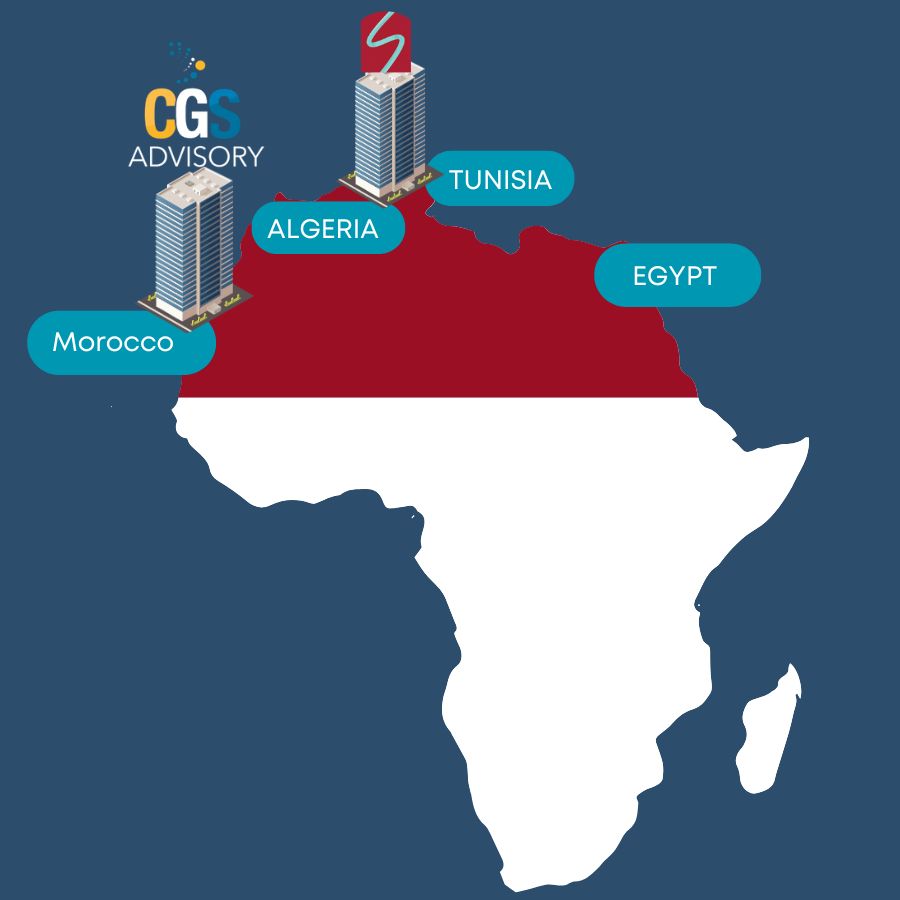
Country-Specific Expertise Across North Africa
Sectoral collective agreements;
Professional classification and grading
Social security compliance (CNSS)
Tunisian labour and social law.
Moroccan Labour Code
Internal collective agreements where applicable;
Job classification and workforce structuring;
Social security compliance (CNSS/CNOPS).
Algerian labour law
Company-level or sectoral collective agreements;
Professional classifications and grading systems
Social security compliance (CNAS)
Is Your Social Environment Truly Secure?
Whether you operate in Tunisia, Morocco or Algeria, our experts help you assess risks, strengthen compliance and build reliable payroll processes
Schedule a discussion with a SAMASYS expert and receive an initial assessment of your current situation.





Frequently Asked Questions (FAQ)
There are currently 57 sectoral collective agreements in Tunisia. They govern employment relationships across a wide range of industries and define the rights and obligations applicable to employers and employees.
Each collective agreement defines, in its first article, the business activities falling within its scope. Companies should compare these activities with those stated in their articles of association and their actual business operations. Subsidiaries providing support services may, in certain cases, be aligned with the collective agreement applicable to the group’s core activity.
Collective agreements are the result of negotiations between employers’ organizations and trade unions. They define the rights and obligations of both parties and typically cover topics such as recruitment, probation periods, working hours, overtime, leave, promotions, social benefits, disciplinary procedures, termination, employee representation and payroll requirements.
Yes. Most Tunisian sectoral collective agreements include annexes containing minimum salary scales based on professional categories, grades and seniority levels.
Applying an inappropriate collective agreement may expose the company to significant legal, social and financial risks, including payroll adjustments, employee claims, penalties and compliance issues during labour inspections or audits.
Professional classification is essential to ensure compliance with labour regulations, determine minimum salary levels and correctly apply employee rights and benefits provided by collective agreements or internal policies.
Yes. When job descriptions or organizational structures are missing or incomplete, SAMASYS can assist companies in documenting roles, clarifying responsibilities and establishing a reliable classification framework.
Yes. While Tunisia has a highly structured collective agreement framework, SAMASYS also supports companies operating in Morocco, Algeria and other countries by analysing local labour regulations, internal agreements and applicable HR practices.
Depending on the scope of the engagement, deliverables may include a detailed assessment report, risk mapping, professional classification matrix, compliance recommendations, corrective action plans and payroll governance guidelines